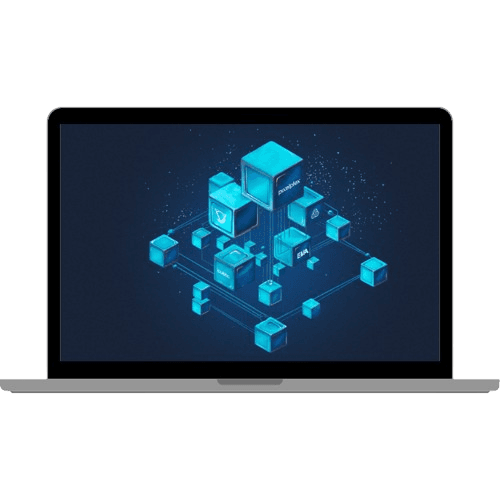
Blockchain Development Services
We design and build enterprise-grade blockchain systems audited smart contracts, DeFi platforms, NFT marketplaces, and Web3 integrations. And we start by asking whether you need one at all, because a blockchain only earns its cost when trust between parties is the actual problem.
What is Blockchain Development?
Blockchain development means building applications where the shared state lives on a distributed ledger rather than in a single organization's database. The core primitive is the smart contract code deployed to a network that executes exactly as written, with no ability to alter it afterward.
That immutability is the point and the risk. No party can quietly rewrite history; equally, a bug you deploy is a bug you cannot patch. Which is why every contract we ship is audited by an independent third party before it reaches mainnet.
Do we actually need a blockchain?
Only if multiple parties who don't fully trust each other need to agree on shared state without an intermediary. If one organization controls the data, a database is faster, cheaper, and repairable. We assess this in week one and tell you honestly roughly half of enquiries we take are better served conventionally.
What's Included
- Chain selection weighed on cost, throughput, and finality
- Smart contract architecture with an explicit access control model
- Independent security audit and remediation
- Off-chain integration oracles, indexing, and your existing systems
- Key management and custody design
Blockchain Solutions Built for Security, Transparency, and Scale
Blockchain's value is in eliminating the need for trust between parties but only if the implementation is airtight. We build audited smart contracts, DeFi platforms, NFT marketplaces, and Web3 integrations with security-first architecture, so your decentralized application is tamper-proof, transparent, and ready for enterprise-scale usage.
On chain selection. Ethereum offers the deepest security and liquidity at the highest gas cost. Polygon and Arbitrum cut transaction costs by orders of magnitude with different trust assumptions. BNB Chain trades decentralization for throughput. For permissioned enterprise use cases, Hyperledger Fabric or Corda may fit better than any public chain. We produce a written comparison against your specific requirements before writing a line of Solidity.
See How We've Deployed This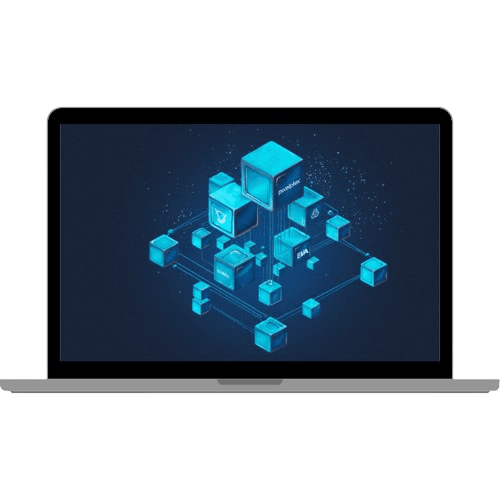













What's Included
Explore the core capabilities we deliver under Blockchain Development.
Smart Contracts
Audited Solidity contracts on Ethereum, Polygon, Arbitrum, or BNB Chain self-executing agreements with explicit access control, gas optimization, and a third-party audit before mainnet.
Audited Solidity contracts on Ethereum, Polygon, Arbitrum, or BNB Chain self-executing agreements with explicit access control, gas optimization, and a third-party audit before mainnet.
Why Choose Us
We don't just write code we build products that drive real business outcomes.
Fast Delivery
Discovery to deployed prototype, typical range
Proven Track Record
Across AI, SaaS, cloud, and data since 2017
Dedicated Team
You get a dedicated team of experts who treat your project like their own product.
Enterprise Security
Security-first architecture with best practices baked into every layer of the product.
24/7 Support
Round-the-clock monitoring and support — we don't sleep when your product is live.
Scalable by Design
Systems built to grow from your first user to your millionth without costly rewrites.
Our Process
Four phases from product strategy to launch. Here's what happens in each, and what you get at the end of it.
Use Case & Chain Selection (1–2 weeks)
We evaluate your requirements against available chains — Ethereum, Polygon, BNB — and recommend the right network for your cost, speed, and security needs.
You Get: A chain selection report with cost, speed, and security trade-offs for your specific use case.
Smart Contract Design (2–3 weeks)
We design the contract architecture, define access controls, and document the logic before writing a single line of Solidity.
You Get: A contract architecture document with access control matrix and logic specification.
Development & Audit (6–12 weeks)
We develop the contracts, run internal security reviews, and engage a third-party auditor before any deployment to mainnet.
You Get: Audited smart contracts with a third-party audit report and remediation sign-off.
Deployment & Integration (1–2 weeks + 30 days monitoring)
We deploy to mainnet, integrate with your frontend or backend, and monitor for anomalies in the first 30 days post-launch.
You Get: A live deployment with integration documentation and 30 days of post-launch monitoring.
Related Services
SaaS App Development
SaaS App Development Services in USA Validated the idea? The platform build is next multi-tenancy, b…
Learn more →Data Engineering
Modern businesses generate enormous amounts of data every day, but data only creates value when it c…
Learn more →Cloud Migration & DevOps
The infrastructure your SaaS runs on. Our Cloud Migration & DevOps Services in USA handle auto-scali…
Learn more →What You Actually Get
Here's what you gain when you choose Blockchain Development with Aridian Technologies.
Agreements That Execute Without an Intermediary
Self-executing contracts that run exactly as written settlement, escrow, and payouts without a clearing party taking a cut and a week.
An Audit Trail Nobody Can Edit
Every transaction permanently recorded and independently verifiable. For supply chain, provenance, and multi-party settlement, that's the entire value proposition.
Contracts Audited Before They're Immutable
Independent third-party audit with remediation sign-off before mainnet deployment. On-chain code can't be patched, so the review has to happen while changes are still possible.
Real Projects, Real Outcomes
Ten industry claims backed by shipped software. Here are three.

ICE Innovations
AI-Powered Ride-Hailing Platform
AI-based driver verification reduced fraud by 80%
Built an AI-powered ride-hailing platform with real-time driver verification using computer vision and automated insurance integration.
Read Case Study
Frontline Ticketing
SaaS Event Ticketing Platform
5+ years of continuous collaboration and 24/7 uptime
Delivered a full-featured multi-currency event management SaaS with AI identity verification, QR entry, and escrow payouts — deployed on AWS.
Read Case Study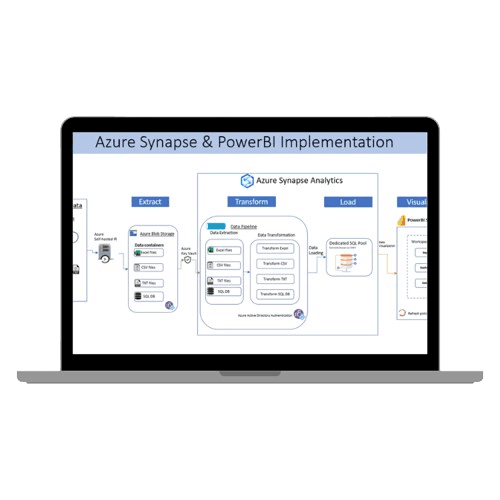
VIA Consulting
Enterprise Azure Data Pipeline
Reporting time reduced from days to hours
Designed and deployed a full ETL pipeline on Azure Synapse migrating Blob Storage to Azure SQL with Power BI dashboards for real-time business insights.
Read Case StudyFrequently Asked Questions
Ethereum, Polygon, Arbitrum, and BNB Chain for public deployments, plus Hyperledger Fabric and Corda for permissioned enterprise networks. We produce a written chain comparison against your cost, throughput, and finality requirements before development starts.
Every contract goes through internal review with static analysis and fuzzing, then an independent third-party audit before mainnet. Audit findings are remediated and re-reviewed with sign-off. We budget audit cost into the engagement from the start rather than presenting it as a surprise.
Yes ERC-721 and ERC-1155 marketplaces with minting, royalties, wallet integration, and IPFS-backed metadata. We'll also discuss whether tokenization genuinely improves your use case, since for many products a conventional platform serves users better.
DeFi platforms provide financial functions lending, staking, exchange, settlement through smart contracts rather than an institution. We build them with audited OpenZeppelin components and Chainlink oracles, and we'd note that DeFi products in the US carry substantial regulatory considerations you'll want counsel on.
Layered: secure architecture patterns, static analysis with Slither and Mythril, fuzzing, internal review, then independent third-party audit. Nothing is ever certified secure — immutability means shipped bugs are permanent, so the review happens while changes are still possible.
Often not. A blockchain earns its cost when multiple parties who don't trust each other need shared state without an intermediary. If one organization controls the data, a database is faster, cheaper, and fixable. We assess this first and say so when the answer is no.
Contract development typically runs [$X–$Y], plus [$X–$Y] for independent audit budget for the audit from the start; it isn't optional. You get a fixed range after the feasibility review, before committing.
That depends on decisions made in architecture. Upgradeable proxy patterns allow patching but introduce centralization; immutable contracts can't be changed at all. We make that trade-off explicit with you before deployment, along with the governance controlling any upgrade key.