
Cross-Platform App Development Services
High-performance apps that run natively on iOS, Android, and web from a single codebase. React Native and Flutter, built for pixel-perfect experiences on every platform at a fraction of the cost and timeline of three separate native builds.
What is Cross Platform Development?
Cross-platform app development means building one codebase that runs as a native app on both iOS and Android, rather than writing and maintaining two separate applications. Frameworks like React Native and Flutter compile to native components, so the result behaves like a native app rather than a website in a wrapper.
We've shipped cross-platform apps used by thousands of daily active users built with React Native and Flutter to deliver native performance on every platform without the cost of separate codebases.
React Native or Flutter which should you choose?
React Native suits teams with existing JavaScript or React experience and products needing heavy third-party integration. Flutter suits apps where UI consistency across platforms matters most and where you want tighter control over rendering. Both ship production-grade apps; the right answer usually depends on your team, not the framework.
Is cross-platform slower than native?
For most applications, no modern frameworks render genuine native components, and the performance difference is imperceptible in typical use. The gap appears in graphics-heavy work: games, AR, and real-time video processing. If that’s your product, we’d recommend native.
What's Included
- One codebase, roughly 90% shared across platforms
- One release cycle instead of two
- Native modules where a platform-specific capability is needed
- Genuine native UI components, not web views
One Codebase. Native Quality on Every Platform.
Building separate native apps for iOS, Android, and Web triples your development cost and fragments your release cycle. With React Native and Flutter, we build once and deploy everywhere delivering pixel-perfect, high-performance experiences on every platform at a fraction of the cost and timeline of separate native builds.
On over-the-air updates: cross-platform gives you something native builds can't. With CodePush or EAS Update, JavaScript-layer fixes ship to users in hours instead of waiting on App Store review. For products that iterate weekly, that's often a bigger practical win than the cost saving.
See How We've Deployed This









What's Included
Explore the core capabilities we deliver under Cross Platform Development.
Cross-Platform Architecture
One codebase sharing 90%+ of its logic across iOS and Android, with platform-specific optimizations where each OS expects different behaviour. Built in React Native or Flutter depending on your team and product requirements.
One codebase sharing 90%+ of its logic across iOS and Android, with platform-specific optimizations where each OS expects different behaviour. Built in React Native or Flutter depending on your team and product requirements.
Why Choose Us
We don't just write code we build products that drive real business outcomes.
Fast Delivery
Discovery to deployed prototype, typical range
Proven Track Record
Across AI, SaaS, cloud, and data since 2017
Dedicated Team
You get a dedicated team of experts who treat your project like their own product.
Enterprise Security
Security-first architecture with best practices baked into every layer of the product.
24/7 Support
Round-the-clock monitoring and support — we don't sleep when your product is live.
Scalable by Design
Systems built to grow from your first user to your millionth without costly rewrites.
Our Process
Four phases from product strategy to launch. Here's what happens in each, and what you get at the end of it.
Platform Strategy (3–5 days)
We define the right framework React Native or Flutter based on your performance requirements, team, and long-term roadmap.
You Get: A framework recommendation with trade-off analysis and a project timeline.
UI/UX Prototyping (1–2 weeks)
We design and prototype the full app experience in Figma, validated with real users before a single line of code is written.
You Get: A user-tested Figma prototype with all core flows and a component spec.
Cross Platform Development (6–12 weeks)
We build from a single codebase with platform-specific optimizations where needed so the app feels native on every device.
You Get: A production-ready app running on iOS and Android with automated test coverage.
Testing & App Store Launch (2 weeks + 2 weeks post-launch)
We run device testing across iOS and Android, handle App Store and Play Store submissions, and support the first two weeks post-launch.
You Get: A live app on both stores with crash monitoring, analytics, and two weeks of post-launch support.
Related Services
SaaS App Development
SaaS App Development Services in USA Validated the idea? The platform build is next multi-tenancy, b…
Learn more →Mobile App Development
Mobile App Development Services in USA When the MVP needs to be native App Store review, offline be…
Learn more →MVP & Prototype Development
MVP & Prototype Development Services in USA Testing the idea before committing to the platform? We s…
Learn more →What You Actually Get
Here's what you gain when you choose Cross Platform Development with Aridian Technologies.
One Team, Not Three
A single codebase means one team, one backlog, one release cycle. The coordination cost of running parallel iOS and Android teams usually exceeds the framework's overhead by a wide margin.
Native Performance Where It Counts
Genuine native components, not web views. Platform-specific optimization where each OS expects different behaviour so the app feels like it belongs on both.
Fixes That Ship in Hours
Over-the-air updates push JavaScript-layer changes straight to users. A bug found Monday morning doesn't wait a week for App Store review.
Real Projects, Real Outcomes
Ten industry claims backed by shipped software. Here are three.
ICE Innovations
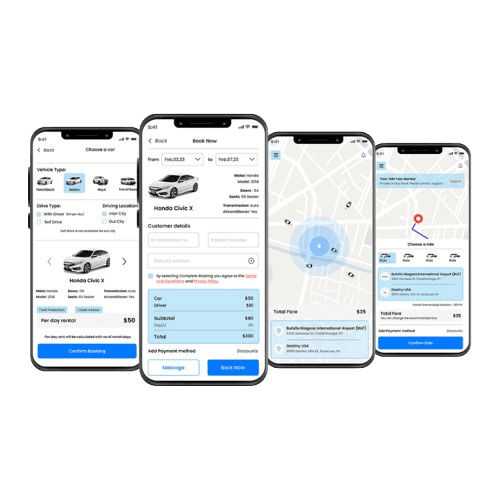
AI-Powered Ride-Hailing Platform
AI-based driver verification reduced fraud by 80%
Built an AI-powered ride-hailing platform with real-time driver verification using computer vision and automated insurance integration.
Read Case Study
Frontline Ticketing
SaaS Event Ticketing Platform
5+ years of continuous collaboration and 24/7 uptime
Delivered a full-featured multi-currency event management SaaS with AI identity verification, QR entry, and escrow payouts — deployed on AWS.
Read Case Study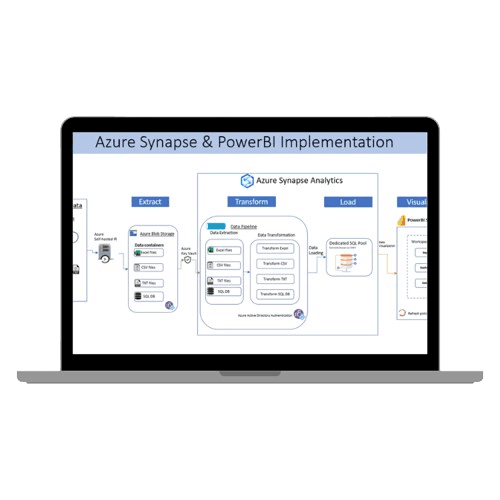
VIA Consulting
Enterprise Azure Data Pipeline
Reporting time reduced from days to hours
Designed and deployed a full ETL pipeline on Azure Synapse migrating Blob Storage to Azure SQL with Power BI dashboards for real-time business insights.
Read Case StudyFrequently Asked Questions
Building one codebase that runs as a native app on both iOS and Android instead of maintaining two separate applications. Frameworks like React Native and Flutter compile to native components, so the result behaves like a native app rather than a website in a wrapper.
React Native if your team knows JavaScript or React, or the product needs heavy third-party integration. Flutter if UI consistency across platforms is the priority and you want tighter rendering control. Both ship production apps we recommend based on your team and roadmap, with the trade-offs written down.
For most apps, no. Modern frameworks render genuine native components and the difference is imperceptible in normal use. The gap shows in graphics-heavy work games, AR, real-time video. If that's your product, we'd recommend native and say so before you commit
Yes. Local storage, queued actions, and conflict resolution so the app works without a connection and reconciles when it returns. Essential for field service, logistics, and travel apps and worth building in from the start rather than retrofitting.
We handle App Store Connect and Play Console submissions, metadata, screenshots, and review responses. Rejections usually come from privacy declarations or review guideline details, so we pre-check against both. Phased rollout configured before launch.
When the app depends on platform-specific capability heavy graphics, AR, complex background processing, or an OS feature that ships ahead of the framework bridges. Roughly one enquiry in five is better served natively, and we'll tell you during platform strategy.
Yes. Standard frameworks, documented release process, your store accounts, your repositories. We hand over a maintenance guide and run a walkthrough no proprietary tooling your team would have to unpick.