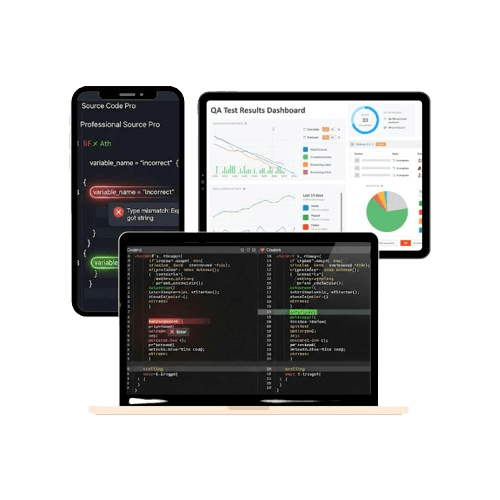
QA & Software Testing Services
We embed quality into every stage of your development cycle automated test suites on every push, load testing before every release, and security scanning wired into CI. So software ships without critical bugs, holds under peak traffic, and meets the standards your users and regulators expect.
What is Software QA & Testing?
Software QA is the practice of catching defects before users do through a mix of automated tests that run on every code change and targeted manual testing where judgment is needed. Modern QA isn't a phase before release; it's a set of gates inside the development pipeline that stop broken code reaching production.
We embed QA into your development cycle rather than bolting it on at the end — automated test suites on every push, load testing before every major release, and security scans before you go live.
What's the difference between manual and automated testing?
Automated tests run on every code change and catch regressions cheaply at scale they're for things you'll check a thousand times. Manual testing is for exploratory work, usability, and edge cases requiring judgment. Most healthy products need both; automation handles repetition, people handle discovery.
How much test coverage do we actually need?
Chasing 100% coverage is a bad goal it rewards testing trivial code and inflates suite runtime. Target high coverage on critical paths, payment flows, and anything touching money or personal data, and accept lower coverage elsewhere. Coverage is a diagnostic, not a target.
What's Included
- Unit and integration tests owned by the engineers writing the code
- End-to-end suites covering the paths that actually generate revenue
- Performance testing against realistic load, not optimistic load
- Security scanning for known vulnerabilities and dependency risks
- CI gates that block a merge when coverage or tests fail
Ship Software That Works — Every Time, Under Any Load
Bugs that reach production cost ten times more to fix than bugs caught in testing.On flaky tests. The most common reason a test suite gets abandoned isn't missing coverage it's that tests fail intermittently for reasons nobody trusts, so engineers start ignoring red builds. We treat flakiness as a defect class of its own: quarantine, root-cause, fix. A suite nobody trusts is worse than no suite, because it costs time and buys no confidence.
On speed. Testing gets blamed for slowing teams down, and badly built suites do. We parallelize, shard, and split by risk so the pipeline stays under [X] minutes fast enough that engineers run it rather than route around it.
See How We've Deployed This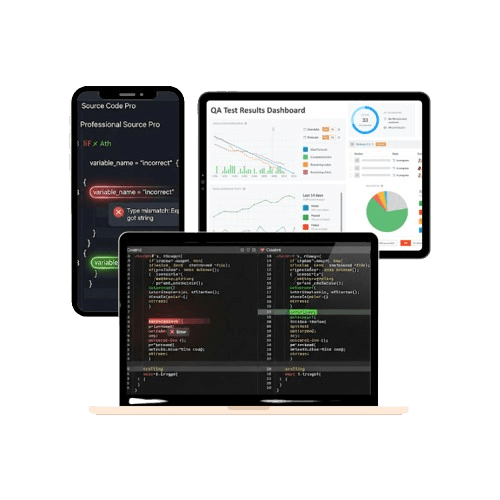








What's Included
Explore the core capabilities we deliver under Software QA & Testing.
Automated Testing
End-to-end suites with Playwright, Cypress, and Jest that catch regressions automatically on every code push. Parallelized and sharded so the suite runs in minutes and stays in the pipeline instead of being skipped.
End-to-end suites with Playwright, Cypress, and Jest that catch regressions automatically on every code push. Parallelized and sharded so the suite runs in minutes and stays in the pipeline instead of being skipped.
Why Choose Us
We don't just write code we build products that drive real business outcomes.
Fast Delivery
Discovery to deployed prototype, typical range
Proven Track Record
Across AI, SaaS, cloud, and data since 2017
Dedicated Team
You get a dedicated team of experts who treat your project like their own product.
Enterprise Security
Security-first architecture with best practices baked into every layer of the product.
24/7 Support
Round-the-clock monitoring and support — we don't sleep when your product is live.
Scalable by Design
Systems built to grow from your first user to your millionth without costly rewrites.
Our Process
Four phases from product strategy to launch. Here's what happens in each, and what you get at the end of it.
Test Strategy & Planning (1 week)
We define the testing scope, risk areas, and coverage targets — aligned to your release cadence and compliance requirements.
You Get: A test strategy document with scope, risk matrix, coverage targets, and tooling recommendations.
Test Case Development (1–3 weeks)
We write test cases for every critical path, edge case, and regression scenario before automation begins.
You Get: A complete test case library covering critical paths, edge cases, and regression scenarios.
Automated Suite Setup (2–6 weeks)
We build and configure your automated test suite — Playwright, Cypress, k6, or Jest — integrated into your existing repo and CI pipeline.
You Get: A running automated test suite integrated into your CI pipeline with baseline coverage reports.
Reporting & CI Integration (1 week + ongoing)
We wire test results into your CI/CD workflow with clear pass/fail gates, coverage reports, and Slack alerts on failures.
You Get: CI-integrated test reporting with pass/fail gates, coverage dashboards, and failure alerts.
Related Services
SaaS App Development
SaaS App Development Services in USA Validated the idea? The platform build is next multi-tenancy, b…
Learn more →Cloud Migration & DevOps
The infrastructure your SaaS runs on. Our Cloud Migration & DevOps Services in USA handle auto-scali…
Learn more →Enterprise Software Development
As a leading Software Development Company in USA, we provide comprehensive Enterprise Software Devel…
Learn more →What You Actually Get
Here's what you gain when you choose Software QA & Testing with Aridian Technologies.
Fewer Bugs Reaching Users
Automated coverage on critical paths means regressions get caught on the branch, not in production. Clients typically see [X]% fewer production defects within two release cycles.
Release Cycles That Speed Up
A pipeline that runs in minutes and gates on real signal means shipping stops being an event. Teams that trust their suite deploy more often, not less.
Vulnerabilities Found Before Breaches
OWASP Top 10 coverage and dependency scanning on every merge, with alerting on new CVEs affecting your stack. Security findings arrive as tickets rather than as incidents.
Real Projects, Real Outcomes
Ten industry claims backed by shipped software. Here are three.
ICE Innovations
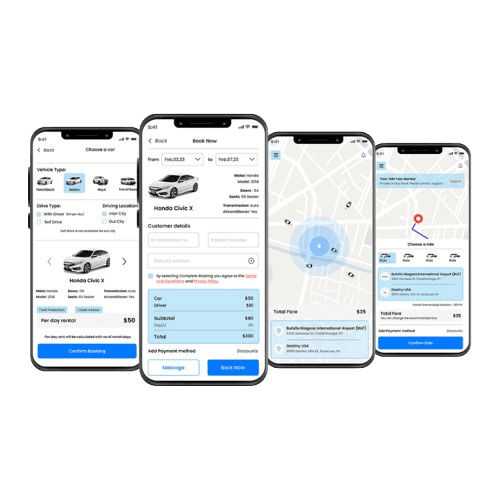
AI-Powered Ride-Hailing Platform
AI-based driver verification reduced fraud by 80%
Built an AI-powered ride-hailing platform with real-time driver verification using computer vision and automated insurance integration.
Read Case Study
Frontline Ticketing
SaaS Event Ticketing Platform
5+ years of continuous collaboration and 24/7 uptime
Delivered a full-featured multi-currency event management SaaS with AI identity verification, QR entry, and escrow payouts — deployed on AWS.
Read Case Study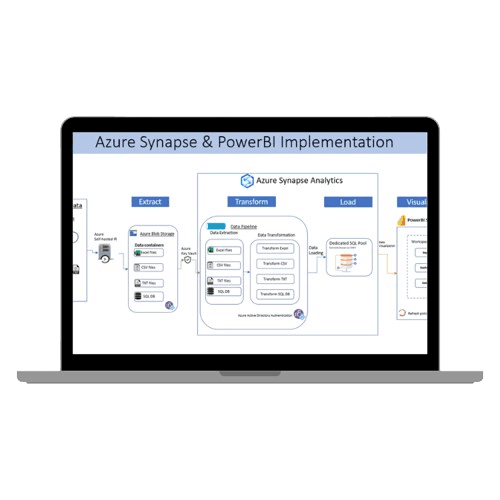
VIA Consulting
Enterprise Azure Data Pipeline
Reporting time reduced from days to hours
Designed and deployed a full ETL pipeline on Azure Synapse migrating Blob Storage to Azure SQL with Power BI dashboards for real-time business insights.
Read Case StudyFrequently Asked Questions
Automated end-to-end and regression testing, performance and load testing, security scanning, API testing, and targeted manual testing for exploratory and usability work. Most engagements combine automated coverage on critical paths with manual testing where judgment matters.
Tests run in your CI pipeline on every push, with pass/fail gates that block merges when critical suites fail. Coverage dashboards and failure alerts go to your team's existing channels, so quality signal arrives where engineers already work.
Playwright and Cypress for end-to-end, Jest or Vitest for unit and integration, Appium for mobile, and k6 or JMeter for load. We match your existing stack where one exists rather than migrating you to our preference.
A working automated suite integrated into CI typically takes four to eight weeks depending on application complexity and existing coverage. Test strategy comes first one week so you know the scope and coverage targets before the build starts.
Yes, and it's a common starting point. We begin with a test strategy review of what exists, identify the highest-risk uncovered paths, and build outward from there rather than attempting full coverage on day one.